Obsidian 2026 Latest iCloud Sync Tutorial: Step-by-Step Mac and iPhone Setup
This tutorial starts by creating the correct Obsidian iCloud folder on iPhone, then shows how to open the same Vault on Mac and iPhone and verify sync.
Must read before use
According to Obsidian's official instructions, an iCloud vault should live in this location:
iCloud Drive/Obsidian/your vault name
The "Obsidian" folder needs to be created by the Obsidian app itself, and its icon will include the Obsidian logo. A manually created folder with the same name will not have that logo, and the iPhone or iPad app may not recognize it.
I recommend creating an iCloud vault on the iPhone first, so the app can generate the correct "Obsidian" folder. After that, whether you keep using the new vault or migrate an existing Mac vault, this is the location to work from.
The full setup process is below.
Create the iCloud sync folder on iPhone
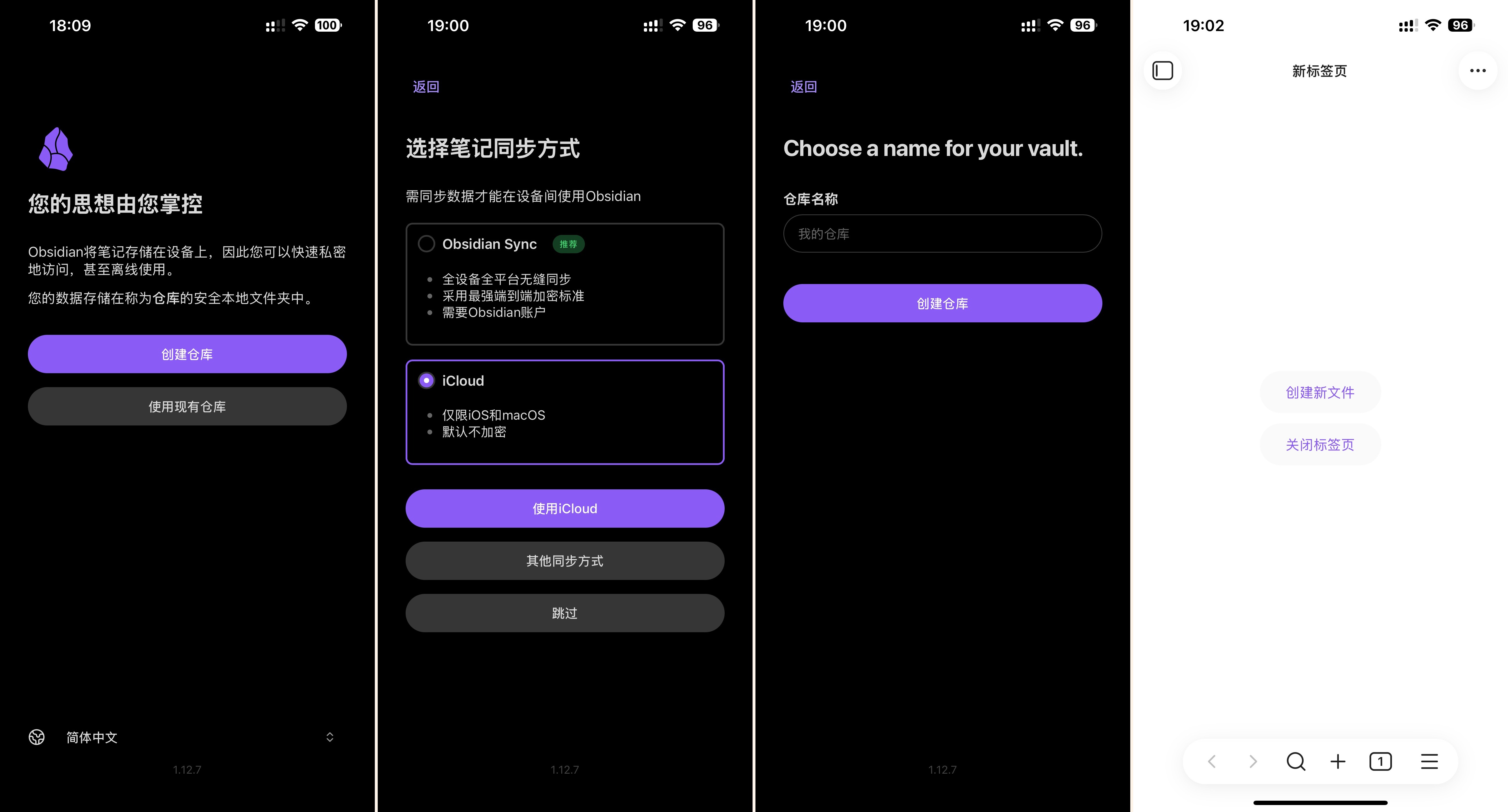
First install and open Obsidian on your iPhone, then create a new vault.
The general steps are:
- Click "Create vault"
- Select "Set up sync"
- Click iCloud and enable iCloud storage
- Enter a vault name
- Click "Create vault"
After these steps, Obsidian opens the notes screen.
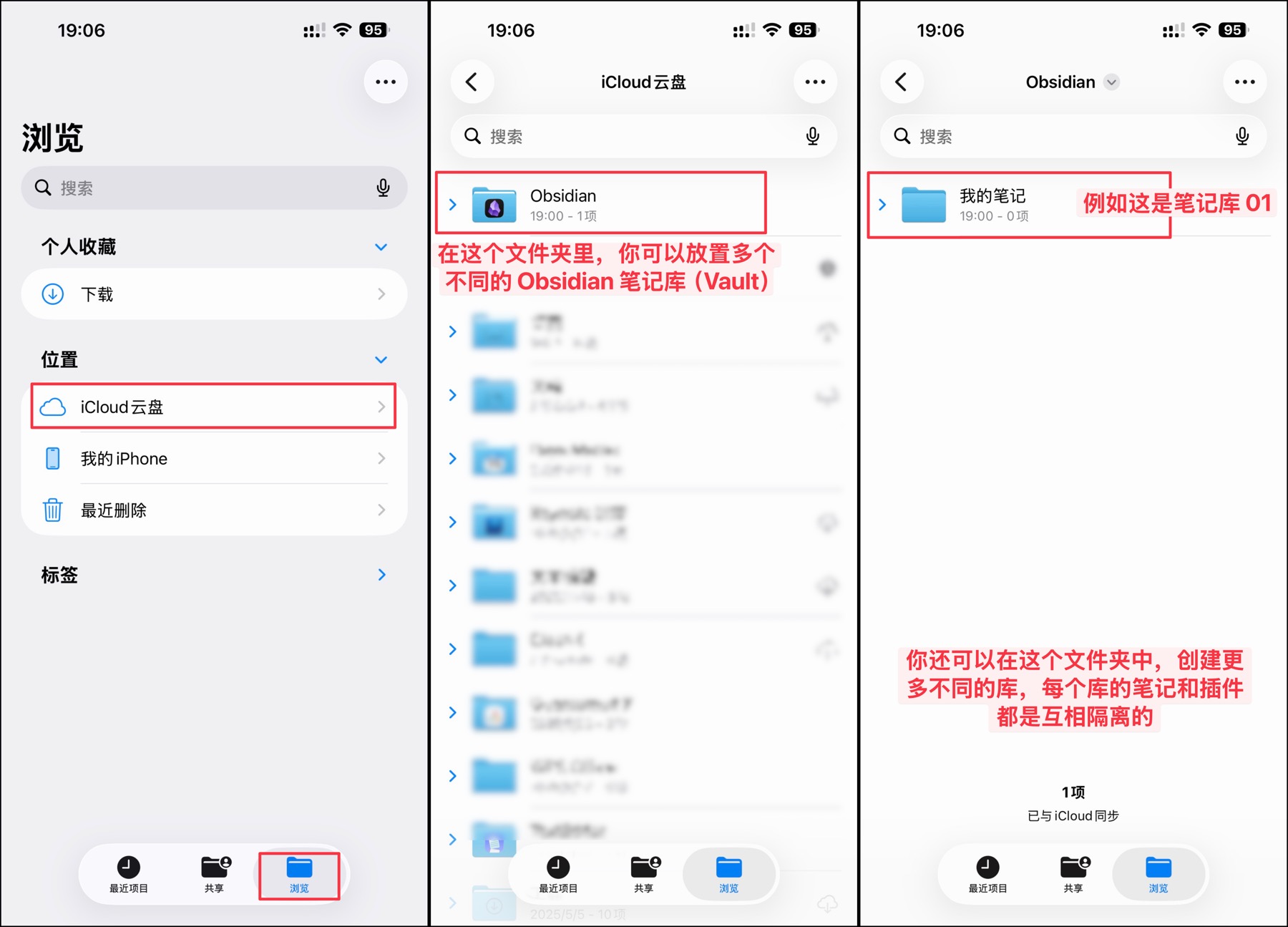
The important result is a dedicated folder in iCloud Drive that mobile Obsidian can recognize.
Open the iPhone's "Files" app and go to iCloud Drive. You should see an "Obsidian" folder with the Obsidian icon. Obsidian uses this dedicated iCloud location, and the mobile app will read the vault from here.
Open this vault on Mac
Back on your Mac, first make sure you are signed in with the same Apple ID and iCloud Drive is turned on.
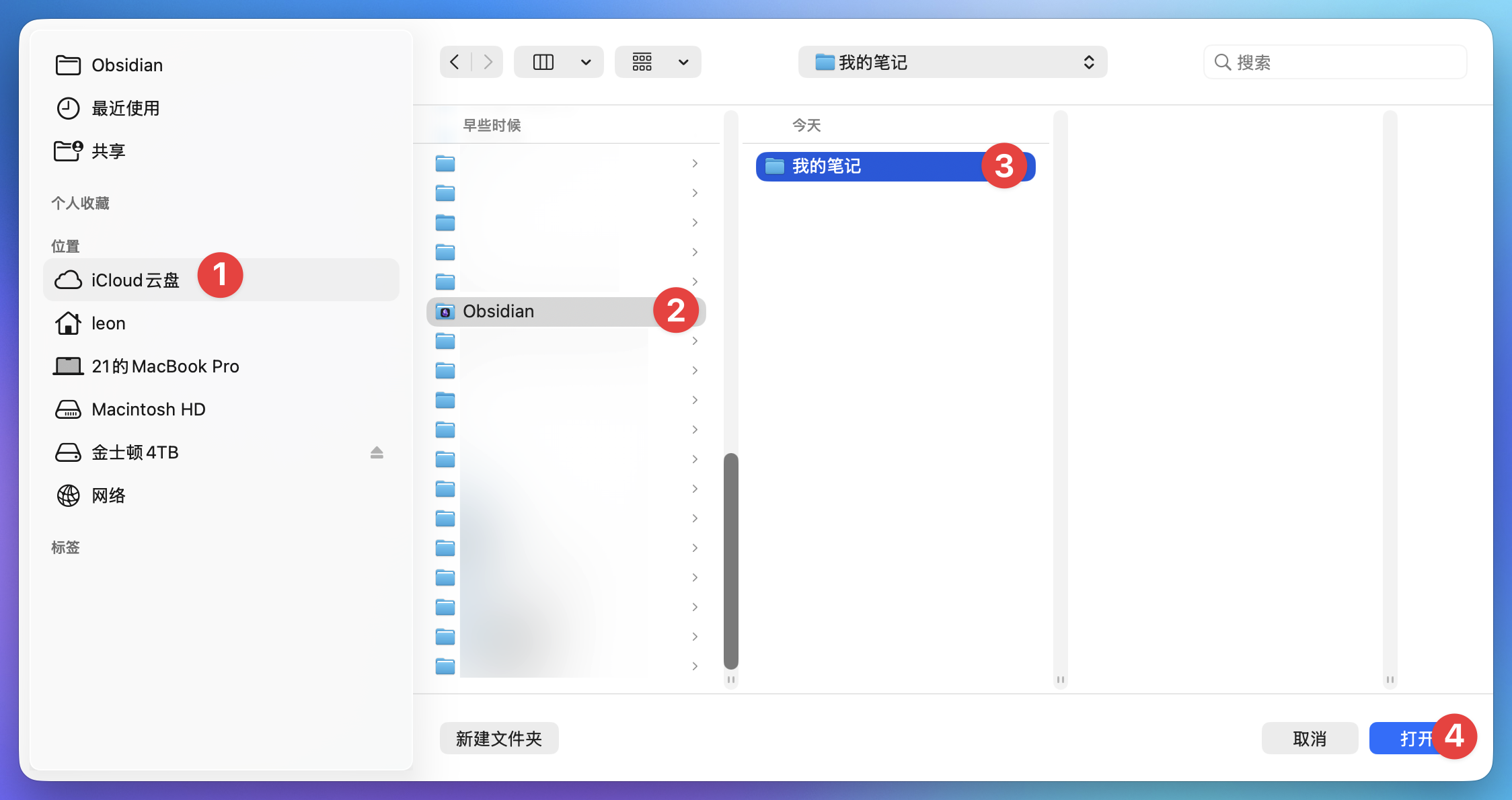
If you are opening Obsidian for the first time, click "Open folder as vault". If you already use another Obsidian vault on your Mac, click "Manage vaults" in the lower-left corner, then click "Open folder as vault".

Then find the Obsidian folder in iCloud Drive and select the vault you just created on your iPhone.
If the prompt below pops up, click "Allow".
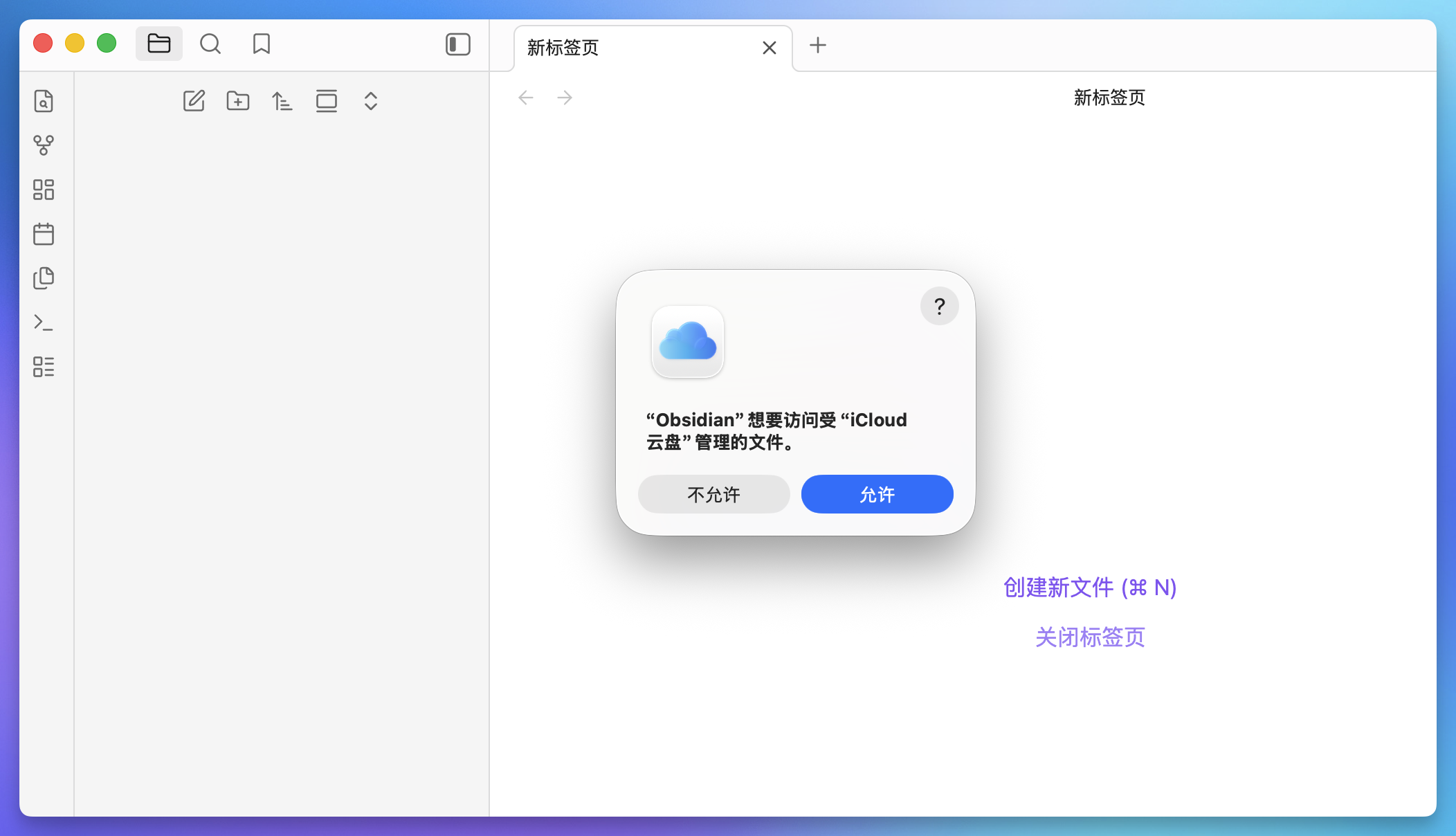
Now the Mac and iPhone are opening the same vault, and iCloud will sync the content between them.
Create a test note on the Mac, then wait for the iPhone to finish syncing and check whether the note appears there. If it does, the iCloud path is working.
How to deal with different situations
If you've already created an Obsidian iCloud vault on your iPhone or iPad, you don't need to recreate it. Select "Open folder as vault" on Mac, find iCloud Drive/Obsidian/your vault name, and open it.
If you originally only used Obsidian on Mac, create the sync folder from the iPhone first. Then return to the Mac, copy the original vault to iCloud Drive/Obsidian/, and open that copied vault in Obsidian on Mac.
The correct location should look like this:
iCloud Drive/Obsidian/your vault/
What to check after migration is complete
Whether you create a new vault or migrate an existing one, do a final check:
- Are Mac and iPhone opening the same vault?
- Can notes created on Mac appear on iPhone?
- Can changes made on iPhone sync back to Mac?
- Can attachments such as images, PDFs, and recordings open normally?
- Is iCloud still downloading files, and do any files still show a cloud icon?
FAQ
Can I create an iCloud note library directly on my Mac?
Yes. Obsidian's official instructions also say that when creating a new vault on Mac, you can choose iCloud Drive/Obsidian as the location.
For most users, I still recommend creating it on iPhone first, because many sync problems come from the mobile app not recognizing the right folder. Let the iPhone generate the correct location first, then open or migrate the vault from Mac later.
Can I manually create the Obsidian folder in iCloud Drive?
No. The official instructions specifically say that iPhone and iPad should use the folder with the Obsidian icon, not a regular folder.
Even if a normal folder is named "Obsidian", the mobile app may not recognize it as expected.
Can the same library be given to both iCloud and Obsidian Sync?
I do not recommend it. Use only one sync method for the same vault. When multiple sync tools process the same files, conflicts, duplicate files, and broken settings become much more likely.
If you already have a Mac note library, do you need to back it up before migrating to iCloud?
Yes. The first time iCloud syncs the whole vault, it may take a long time.
Use "copy" instead of "move" so the original local vault remains in place. After both devices can open the vault and the notes and attachments are complete, you can deal with the old local copy.
What should I do if iCloud synchronization is slow?
First make sure iCloud Drive is turned on and both devices are signed in with the same Apple ID.
Then open the Files app or Finder and check whether files are still uploading or downloading. Slow sync is normal when the vault has many attachments, large images, or a full first-time migration. Before sync finishes, avoid editing the same batch of notes on multiple devices.
If you are using macOS 15 or later, right-click the Obsidian folder in iCloud Drive in Finder and select "Keep Downloaded." This reduces cases where iCloud offloads files and Obsidian cannot read them temporarily.
If you are using macOS 14 or earlier, check "Optimize Mac Storage" in iCloud settings. This setting affects all iCloud files, not only Obsidian, so confirm that you accept the change before adjusting it.
What should I do if I can’t see the library on my phone after migration?
Go to the iPhone’s “Files” app and check the path:
iCloud Drive/Obsidian/your vault name
Make sure the vault is inside the folder with the Obsidian icon. If it is somewhere else in iCloud Drive, or inside a regular "Obsidian" folder, the mobile app may not read it normally.
Summary
The key to syncing Obsidian with iCloud is putting the vault in the location that iPhone and iPad can recognize.
Create the iCloud vault on iPhone first, let iCloud generate the correct Obsidian folder, then either keep using that new vault or copy your original Mac vault into this location.
As long as the path is correct, you use only one sync method, and you back up before migration, iCloud can handle basic Obsidian syncing between Apple devices.
Author

Categories
More Posts

我如何改造 Obsidian|模板开发日志(三)

Obsidian 模板开发日志(一):下定决心
这篇开发日志记录我为什么开始认真开发 FLO.W Obsidian 模板,以及我对 Notion、AI 时代笔记价值和 Obsidian 模板设计的重新思考。
Obsidian 2026 Feiniu NAS Sync Tutorial: WebDAV + Remotely Save Setup Guide
This Feiniu NAS sync tutorial uses FN-NAS WebDAV and FN Connect as an example to show how to configure Obsidian Remotely Save on desktop and mobile.